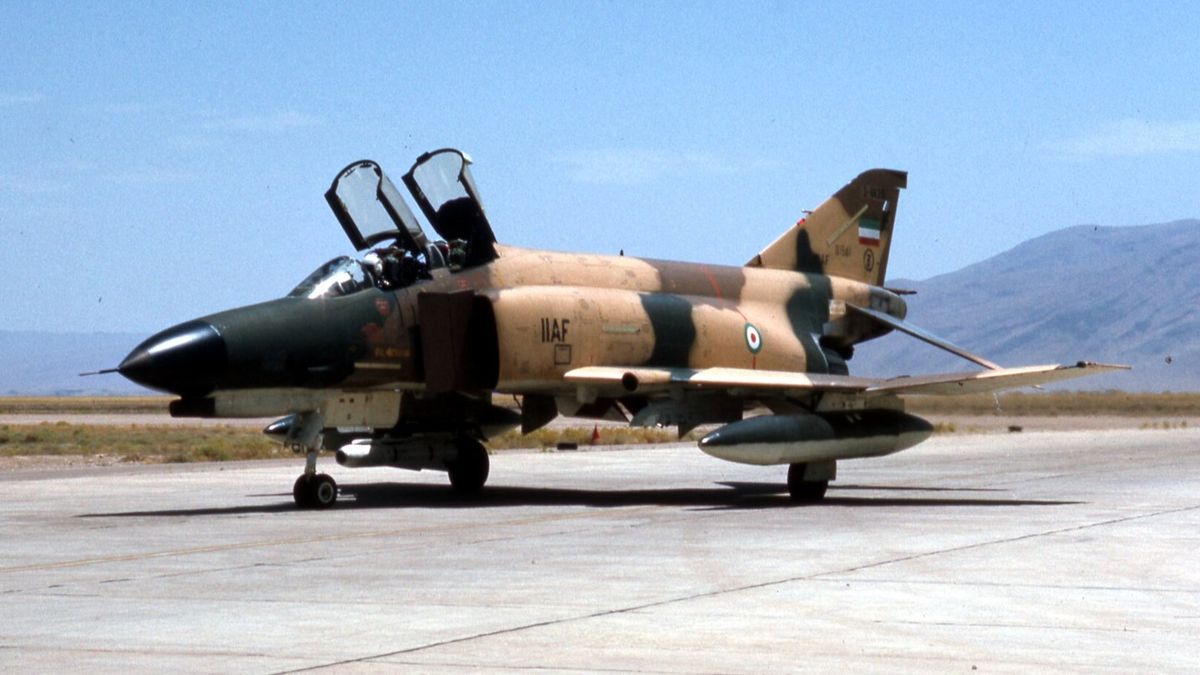
Iranian F-4 Phantom at Shiraz, August 1977. This period photo does not show the Tehran encounter. U.S. National Archives, public domain; cropped.
The fighter crew expected an explosion. A bright object appeared to drop toward the ground south of Tehran, but instead of a blast, the crew reported seeing light spill across the area. They marked the spot. When they returned by helicopter in daylight, the place they’d picked out was a dry lake bed, and the report records nothing unusual there.
That search is tucked into a declassified U.S. Defense Attaché cable about the September 19, 1976, UFO report over Tehran. The cable describes two Iranian fighter jets sent to investigate a bright light, a reported radar lock, and a weapons panel that went dark just as a pilot tried to fire. The helicopter trip was a chance to look for something on the ground.
Two Phantoms went up
The first calls came from residents in the Shemiran area. They didn’t all describe the same thing: some reported a birdlike shape, others a helicopter with a light. An officer checked with Mehrabad Tower, looked outside himself, and saw what he described as something like a star, only brighter.
An Iranian F-4 Phantom went up. According to the cable, the pilot lost instruments and communications as he closed in, broke off the intercept, and got both back when he turned away. A second Phantom followed. Its crew reported a radar lock at 27 nautical miles, but said the light was too bright to judge the object’s size by eye.
The second crew described a smaller light that seemed to come out of the first and head straight at them. The cable says the pilot tried to fire an AIM-9 missile, lost his weapons controls and communications, then turned and dived. The crew reported getting both back before watching another light descend toward the spot they’d later search.
What the helicopter found

The lake bed was quiet. Farther west, the helicopter picked up a beeper signal. It was loudest near a small house with a garden. People there recalled a loud noise and a bright light like lightning, but the cable never identifies what made the signal or ties it to what the crew saw. The report says checks for possible radiation were underway; it gives no results.
Who told the story?
There’s a revealing detail near the end of the longer released file: the information came through a source who spoke with a sub-source and one of the F-4 pilots. The file doesn’t include the radar recording or the aircraft maintenance logs. It preserves the account of the equipment failures without establishing what caused them.
The reports were enough to send up two fighters and bring a crew back to search the ground. That last trip is one part of the case you can pin down in the cable: they went back to the spot they’d marked, and the report describes no trace of the object there. No original photo or footage of the encounter is known from these records.
Read next

The Puerto Rico UFO That Seemed to Split in Two
In a separate case over Puerto Rico, investigators had a sensor recording they could replay to test what the crew saw.
Leave a Reply