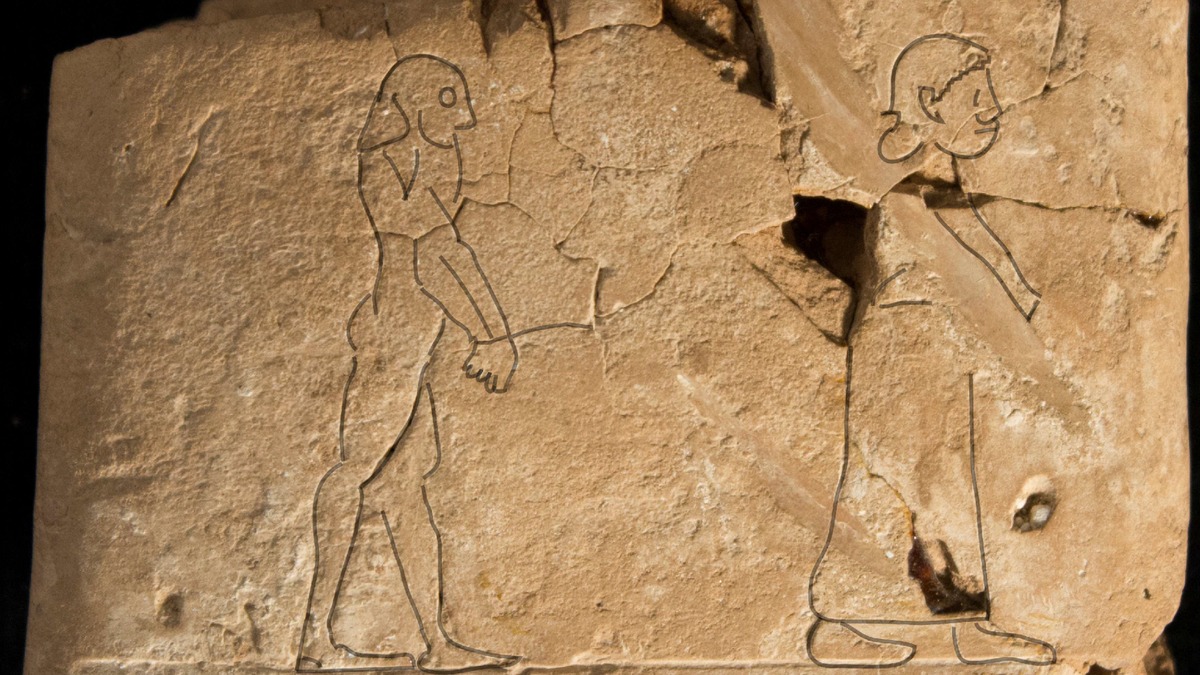
Detail of Late Babylonian tablet BM 47817. Photograph and modern tracing by Strahil Panayotov, Figure A1, CC BY 4.0; cropped. See the full figure.
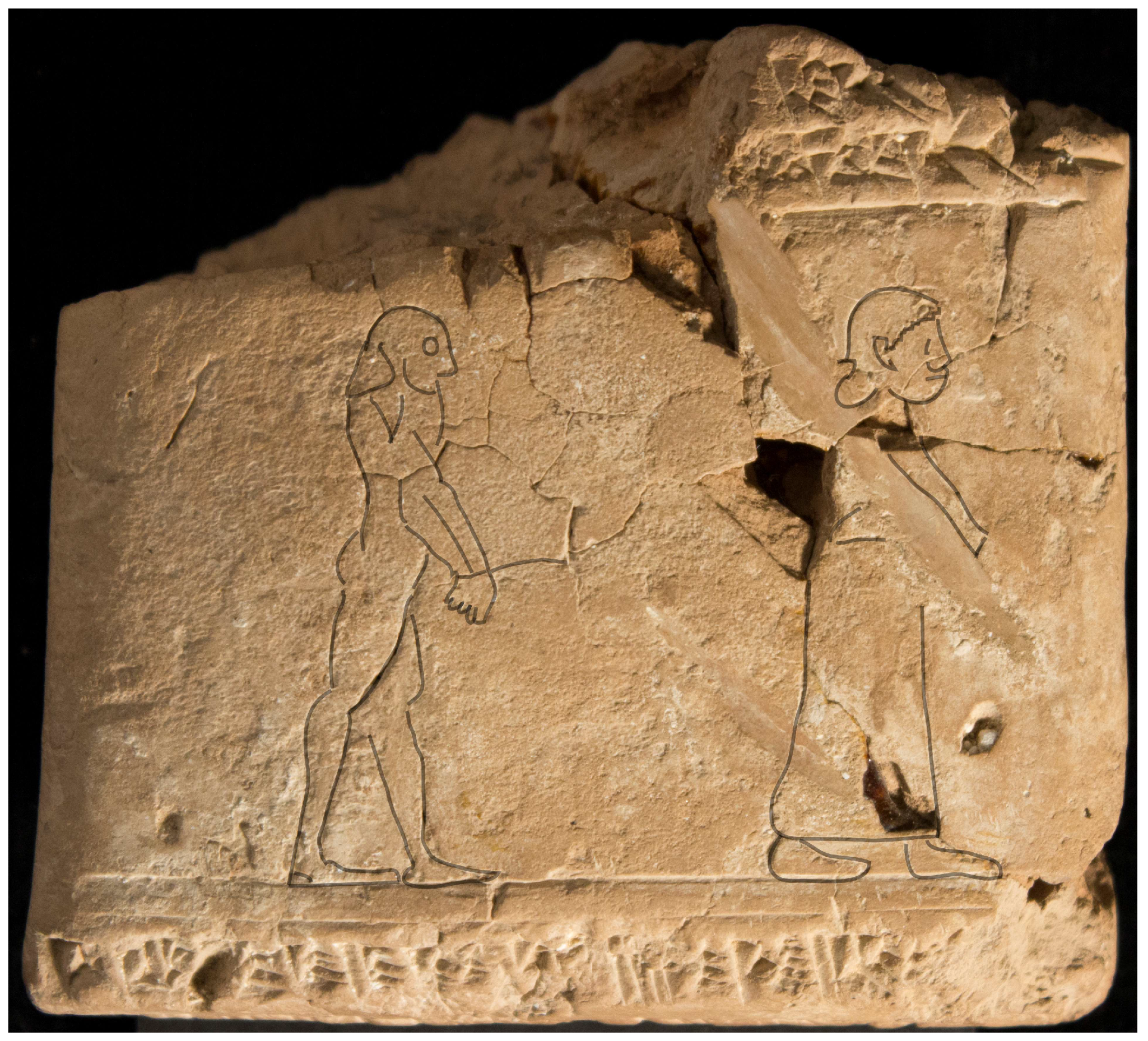
On a clay tablet in the British Museum, one figure strides ahead while another seems to follow. The tablet describes a way to get rid of a ghost: give it someone to leave with. Other Mesopotamian texts ask a stranger question. How did the ghost get in? One answer was through the ear.
Assyriologist Strahil Panayotov brings those ideas together in a November 13 paper in Religions. The tablet and its drawing were known long before the paper. The new argument is that the ear was more than a symptom in these ancient texts. It may have been part of the explanation.
Make the ghost a companion
The Late Babylonian tablet BM 47817 calls for two clay figurines, a man and a woman, to be made and clothed. Assyriologist Irving Finkel reads the ritual as giving the restless ghost a partner who could distract him and lead him away from the living. Panayotov suggests the line between the figures might be a rope. The worn marks leave room for doubt, even with the modern tracing.
The destination makes more sense if you know what the dead were imagined to come home to. In the Akkadian Descent of Ishtar, the underworld is a dark place where dust is food. The British Museum tablet below preserves that story. It’s a different object from the one with the two figures.


The ear was a way in
Panayotov compared medical texts from seventh-century BCE Nineveh. The descriptions of ghost-related afflictions cluster around the head, ears and neck. In the ear section of the collection he studied, every treatment he discusses concerns ghosts. A later commentary also glosses a sign for ghost as an opener of the ear. These were ancient explanations for illness, not evidence of what caused any patient’s symptoms.
The paper follows that idea back to a creation story. The gods make humans from clay mixed with the flesh and blood of a slain god. Panayotov suggests the god’s name might be read as “God’s Ears,” a link to hearing and understanding divine commands. He flags problems with the reading, so it’s a possible connection, not a settled translation.
The clay figures and the ear texts answer different questions. One imagines how a ghost could reach a living person. The other gives it somewhere, and someone, to go. What survives on the clay is a remarkably practical response to an unsettling idea: the dead might need a reason to leave.
Read next

The Cock Lane ghost was asked to knock
In 1762 London, investigators went to a coffin to test a different claim about what the dead could do.
Leave a Reply