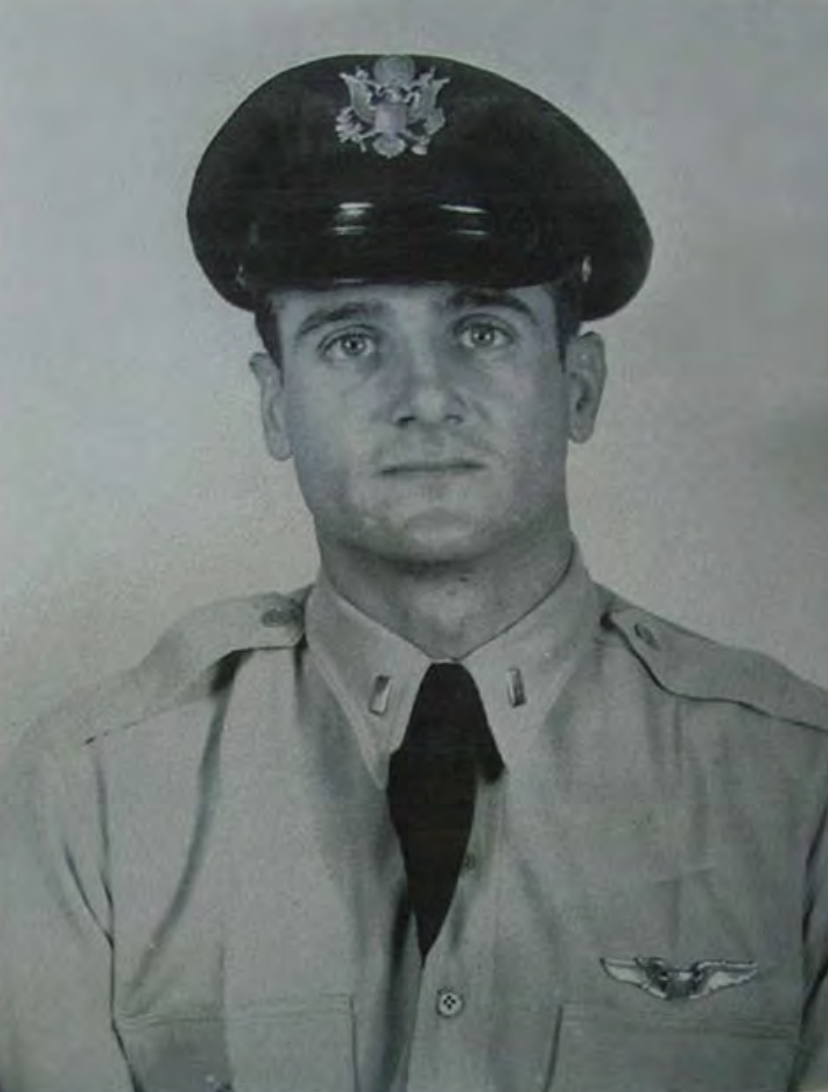
Lt. Felix Moncla, pilot of the missing Kinross F-89. U.S. Air Force, via Northern Michigan University’s Beaumier U.P. Heritage Center.
The voice came through for about five seconds. Lt. William Mingenbach and his radar observer called back several times, but nobody answered. They thought it sounded like Felix Moncla, the pilot whose Air Force jet had just disappeared over Lake Superior. When investigators questioned Mingenbach a few days later, he was no longer so sure.
Moncla and radar observer Robert Wilson had taken off from Kinross Air Force Base in Michigan on November 23, 1953. Their F-89C Scorpion was sent to identify a radar target over the lake. Neither man returned.
Two radar marks closed in
Ground controller Douglas Stuart was watching the intercept. In his signed statement, he describes the marks closing until he could no longer see them separately. He didn’t see them separate again, and the fighter’s identification signal disappeared. The other track continued. There’s no known recording of the radar display, and what Stuart saw on the scope doesn’t establish that the aircraft collided.

The U.S. accident report identified the target as a Royal Canadian Air Force Dakota, VC-912, and put it off its planned route. In a later account, Canadian pilot Gerald Fosberg disputed how far off course his plane was and recalled telling a ground station he had seen no other aircraft lights. The U.S. report gives the radar target a name. It doesn’t explain what happened to the F-89.
The voice on channel 10
Controllers asked Mingenbach’s crew to try reaching the missing jet. In his December 4 signed statement, Mingenbach said the voice seemed to come in mid-sentence and they couldn’t make out what the speaker meant. The crew kept calling. No reply confirmed who it was.

The accident board called him back on December 8. In the transcript of his sworn testimony, Mingenbach was less certain of the time and the voice. He said it might have been another pilot, Lt. Howard Nordeck. There’s no verified recording of that call.

Why the search started again
The initial search found neither the jet nor its crew. Months later, Wilson’s father brought investigators a lead: someone had reported a low-flying aircraft near Limer, Ontario. The witness later said the time might have been wrong, but the Air Force and Canadian rescuers followed up. The May 1954 rescue report says air reconnaissance resumed on May 13 and was suspended on May 23. Wilson’s father asked to be notified so he could attend.
The search map shows where people went looking for Moncla and Wilson. The short radio call never gave them another place to look.
Read next

What did the FAA’s radar see on Flight 1628?
The FAA transcript shows how a radar return and what a pilot reports can tell two different stories.
Leave a Reply